



The Architecture of Stillness: Designing Residences That Reduce Stress, Visual Noise, and Cognitive Fatigue
Why stillness matters now
We live in a world that rarely goes quiet.
There is always something asking for our attention. Screens glow late into the night. Notifications interrupt our thinking. Travel, deadlines, and constant decision-making leave very little space for the nervous system to recover. In that kind of world, the home should do more than look beautiful. It should help the body soften.
After twenty-five years in interior design, I have seen a clear shift in what discerning clients want from their homes. They still value craftsmanship, materiality, and elegance, but increasingly they want something deeper. They want relief. They want a home that feels settled, restorative, and emotionally intelligent.
This is where the idea of the architecture of stillness becomes so important.
Stillness is not about emptiness. It is not about stark minimalism or a home with no personality. In fact, some of the most visually sparse homes can still feel mentally exhausting if they are cold, acoustically harsh, or poorly lit. True stillness is physiological. It is the feeling of walking into a room and noticing that your breathing slows down. Your shoulders drop. Your mind stops scanning.
That response does not happen by chance. It is designed.
Why many homes quietly increase stress
A surprising number of modern homes are created for visual effect rather than lived experience. They photograph well, but they do not always feel good to inhabit.
High contrast interiors, glossy materials, sharp lighting, oversized open plans, and too many competing details can keep the brain subtly alert. The person living inside the home may not consciously identify what feels wrong, but the body notices. The nervous system keeps processing information, and that quiet overload can become tiring over time.
When a home contains too much visual noise, too many surfaces reflecting light, too many patterns fighting for attention, or too little acoustic softness, recovery becomes difficult. This is one reason so many people feel mentally tired in spaces that are technically luxurious.
Luxury alone does not regulate the nervous system. Restraint does. Rhythm does. Balance does.
What stillness looks like in design
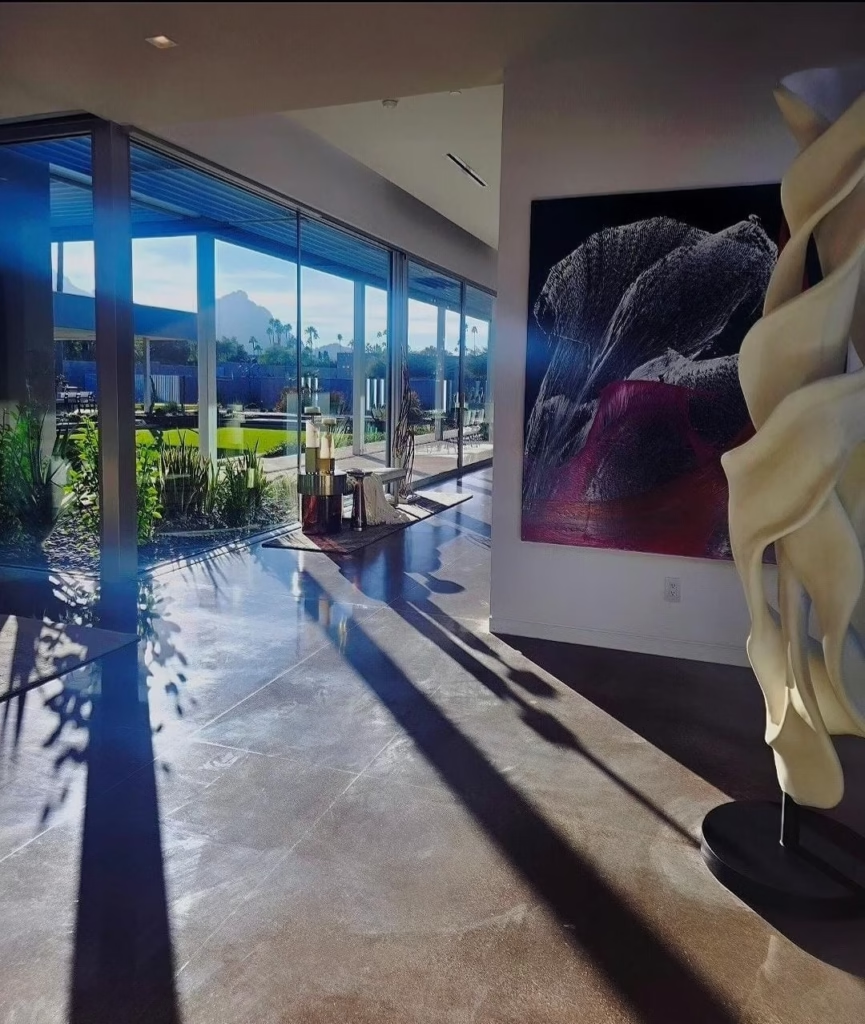
Stillness is created through a series of considered decisions that work together. No single feature can achieve it on its own.
One of the first things I look at is visual hierarchy. The eye needs guidance. In a calm room, not everything asks to be seen at once. There is a focal point, but there is also enough visual breathing room around it. This makes the room easier to process.
Then there is material softness. Softness does not mean everything is plush or decorative. It means the room has tactile and visual warmth. Lime wash, wood, wool, linen, natural stone, and matte finishes tend to quiet a space. They absorb rather than shout.
Color also plays a profound role. Muted and layered palettes are often far more regulating than dramatic contrast. The point is not to make everything beige. The point is to reduce the neurological demand placed on the eye.
And then there is spatial rhythm. A home should not reveal itself all at once. Gradual transitions help the body move from one emotional state to another. Entry, pause, arrival, retreat. These transitions matter more than many people realize.
Reducing visual noise without losing soul
One of the biggest misconceptions in high-end interiors is that richness comes from abundance. It does not. Richness comes from coherence.
A still home can be deeply layered, artistic, and personal. It can hold sculptural furniture, meaningful objects, and powerful art. The difference lies in editing. The room is not crowded with visual information. Every element has purpose.
Objects are placed so they can be experienced slowly. Art is given enough negative space to resonate. Shelving is curated rather than filled. Decorative choices support the architecture rather than compete with it.
This kind of restraint often makes a home feel more luxurious, not less. The reason is simple. The mind experiences calm as value.
The link between stillness and cognitive fatigue
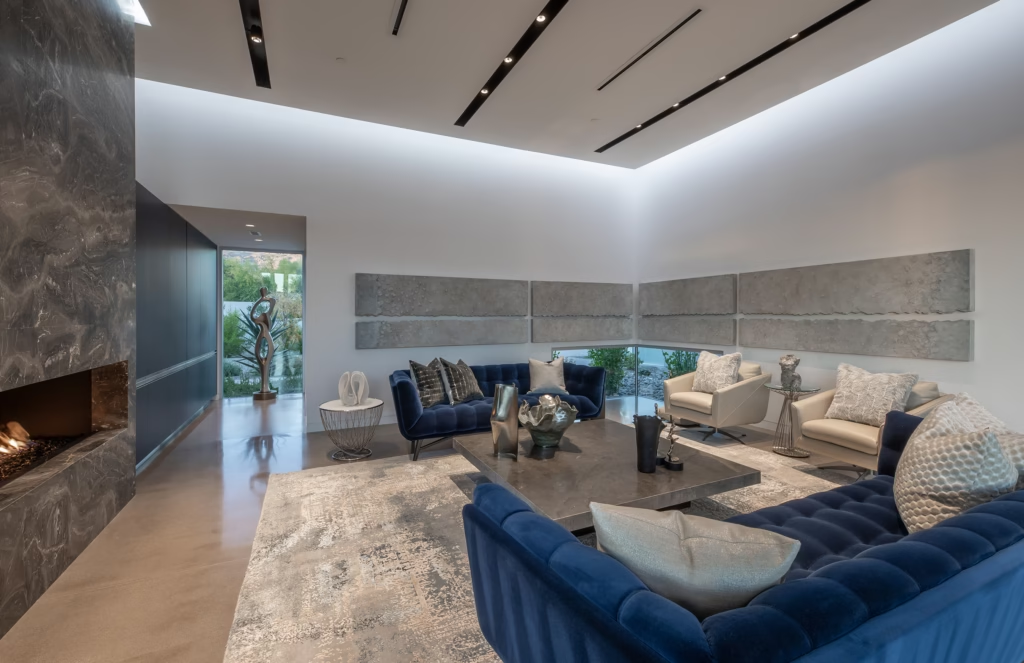
Many high performing people spend their days solving problems, making decisions, processing conversations, and moving quickly from one demand to the next. When they return home, their environment should reduce cognitive load.
A home designed for stillness can do exactly that.
It can reduce decision fatigue because the space feels clear rather than chaotic. It can support emotional regulation because the sensory input is gentle. It can improve focus because the eye and mind are not constantly interrupted. It can improve rest because quiet spaces allow the nervous system to downshift.
These effects may sound subtle, but over years they shape daily life in a meaningful way. A home that restores mental clarity is not just aesthetically successful. It is life-enhancing.
Acoustic calm is part of stillness
Stillness is not only visual. It is also acoustic.
Many luxury interiors are filled with hard surfaces that look refined but amplify sound. Stone, glass, polished finishes, and expansive open spaces can create echo and tension if they are not balanced properly. Even a beautiful room can feel draining if sound lingers too long inside it.
Acoustic calm comes from layering texture, density, and absorption into the architecture. It might come through drapery, rugs, wall treatments, joinery, upholstered seating, or better zoning between active and restorative areas. It is often invisible, but the body feels it immediately.
Silence is not the absence of sound. It is the absence of friction.
Why stillness is becoming a luxury principle
Trends change quickly. Stillness does not.
The reason is that stillness is not trend-based. It is rooted in human biology. People will always need homes that help them feel safe, calm, and mentally clear. As awareness grows around nervous system regulation, wellness design, and emotional wellbeing, stillness is becoming one of the defining qualities of intelligent luxury.
A home that offers visual peace, acoustic comfort, and sensory ease will continue to feel relevant long after trend-led interiors date themselves.
This is one reason I believe calm interior design is not a passing aesthetic. It is part of the future of luxury living.
Final thought
The best homes are not the loudest. They are not the ones performing for attention.
They are the ones that make people feel better.
That is the quiet power of stillness. It gives the mind a place to rest. It gives the body permission to soften. And in a world defined by overstimulation, that may be the most valuable form of luxury we can design.
FAQs
What is the architecture of stillness?
The architecture of stillness is a design approach that reduces visual noise, sensory overload, and cognitive fatigue through calm materials, balanced composition, acoustic softness, and thoughtful spatial flow.
Can interior design reduce stress at home?
Yes. Interior design can reduce stress by improving light quality, lowering visual clutter, softening acoustics, and creating environments that are easier for the nervous system to process.
What causes visual noise in a home?
Visual noise usually comes from too many competing elements, such as excessive contrast, clutter, heavy pattern mixing, reflective surfaces, and poor visual hierarchy.
Is stillness the same as minimalism?
No. Minimalism is an aesthetic approach. Stillness is a physiological experience. A home can feel still and calming without being sparse or impersonal.